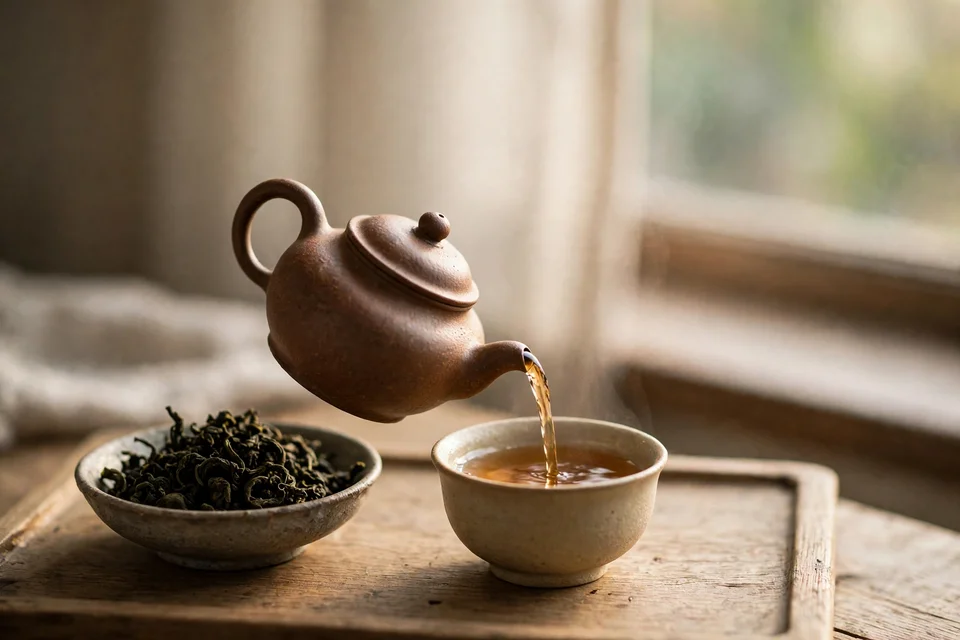
Oolong tea for beginners starts with its range: at one end it is light and floral, almost like a green tea; at the other it is dark and roasted, almost like a black tea. That range is the whole point. If you have tried green tea and found it too light, or black tea and found it too heavy, oolong is probably where you will end up.
What makes oolong oolong
All tea comes from the same plant. What makes oolong different is how far the leaves are allowed to change after picking. Green tea is heated quickly to stop that change almost entirely. Black tea is left to change all the way. Oolong stops somewhere in between — the leaves are bruised, rolled, and left to darken a little, then heated to hold them where they are. The result is a tea that keeps some of the freshness of green and gains some of the warmth and depth of black. The leaves are usually rolled into tight curls or small balls, and they slowly open as they brew, which is half the pleasure of watching it.
What it tastes like
There is no single oolong taste, because the family is so wide. A lightly made oolong, like a high-mountain tea from Taiwan or a fresh Tieguanyin from Fujian, tastes floral and sweet, with a clean, almost creamy softness. A darker, roasted oolong, like Da Hong Pao from the Wuyi mountains or a roasted Dong Ding, tastes warm and toasty, with notes of dried fruit and a long, gentle finish. What most oolongs share is a certain roundness: the flavour arrives smoothly and stays a while, without the sharp edge that green tea can have or the weight of a fully dark tea.
How to brew it
Oolong tea for beginners is forgiving to brew, and it likes small, repeated cups. Use water just off the boil — around 90 to 95 degrees — and about three to four grams of leaves for a small pot or gaiwan of 150 millilitres. The first steep is short, around thirty seconds to a minute. Pour it out, drink it, and steep the same leaves again. Oolong is one of the best teas for re-steeping: the rolled leaves open a little more each time, and the flavour changes across four or five infusions, from bright and floral at first to softer and deeper later on. If you only have a mug, it still works — just use fewer leaves and a slightly longer steep, and be ready for a fuller cup.
Two oolongs to try first
If you want a place to start, try one from each end of the family. Tieguanyin, the Iron Goddess of Mercy from Anxi in Fujian, is the classic light oolong: floral, sweet, and gentle, and a good way to learn what a light oolong can be. Da Hong Pao, or Big Red Robe, from the rocky Wuyi mountains, is the classic dark one: roasted, warm, and deep, with a mineral edge that people describe as yan yun, the taste of the rock it grew on. A third name worth knowing is Oriental Beauty, a bug-bitten oolong from Taiwan: sweet, honeyed, and a good example of how floral a light oolong can be. You do not need to buy both at once. One small bag of either, brewed slowly over an afternoon, will tell you more than a whole shelf of samples.
Light or dark: how to choose
For oolong tea for beginners, the choice is simple: if you like green tea, start with a light oolong. If you like black tea, start with a dark, roasted one. That is really all the guidance you need. The two ends of the family suit different moments, too: a light oolong is good in the morning or on a warm day, when you want something fresh; a roasted oolong suits a quiet evening, when you want something warm and steady. Many people who drink oolong end up keeping both kinds in the cupboard and reaching for whichever fits the hour.
Oolong asks for a little more attention than a tea bag does, but it gives a lot back. It is the tea that shows you what re-steeping is for, what a rolled leaf does as it opens, and how much range one plant can hold. Start with one bag, brew it small and more than once, and let the second and third cups surprise you. That is where oolong really begins.