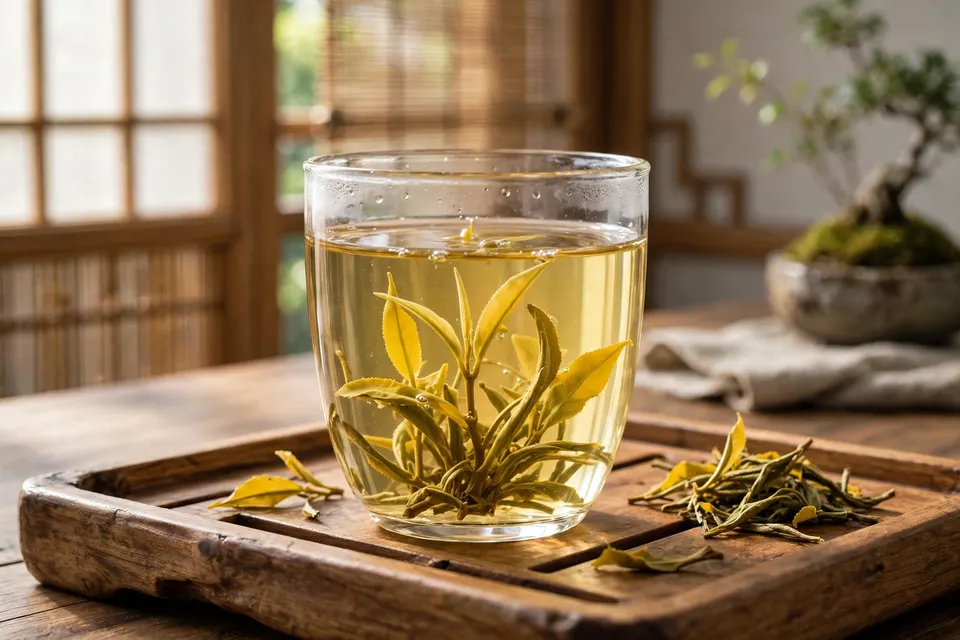
What makes a tea yellow
Yellow tea starts much like green tea: the leaves are heated soon after picking. Then comes the step that gives it its name: the warm leaves are wrapped and left to rest gently, a slow "sealed yellowing" that softens the fresh, grassy edge without changing the tea into something else. It is a small extra step, and it makes a noticeable difference in the cup. That step is also why yellow tea is rare: it takes more time and attention for a tea that sells in small amounts, so few makers bother, and little of it leaves China.
What it tastes like
Expect a smooth, mellow cup: gentle sweetness, a soft nutty or warm hay note, and none of green tea's bite. It is the tea to reach for when you like green tea but sometimes find it too sharp, especially in the morning or on an empty stomach. If your first cup tastes flat, the water may be too cool or the leaf too little — add a little more leaf before you decide you do not like it.
Which kind to try first
For yellow tea for beginners, two names are worth knowing. Junshan Yinzhen, from Hunan, is made mostly from buds and is the classic, delicate example. Huoshan Huangya, from Anhui, is a little more everyday and forgiving. Either is fine as a first try; buy a small amount of one, not a large amount of both, and buy it from a seller who names the origin.
How to brew it
Use water around 85 degrees, not boiling, and about one generous teaspoon (roughly 3 grams) per cup. Steep for two to three minutes in a glass, a gaiwan, or a mug, and watch the leaves sink and open. Pour it out, keep the leaves, and steep them again: a second and third infusion are often sweeter and rounder than the first. Yellow tea is forgiving — water a little too hot will not ruin it the way it can ruin a green tea.
Yellow tea for beginners will not shout for your attention, and that is the point. It is a quiet tea for a slow morning, and a gentle next step once green tea feels familiar.