Most tea does not go bad in a dramatic way. It just slowly loses what made it good: the fresh aroma fades, the flavour flattens, and one day a tea you loved tastes like warm water with a memory in it. The causes are ordinary, and so is the fix.
The five things tea dislikes
Light, air, moisture, heat, and strong smells. Light and heat speed up the fading of aroma. Air does the same, more slowly. Moisture can make tea taste stale or musty. Strong smells are the sneakiest problem, because dry leaves absorb odours easily: tea stored next to coffee, spices, or cleaning products can start to taste like its neighbours.
How to store tea is simply keeping it away from all five at once. You do not need to be perfect about it. You need to be consistent.
What to put it in
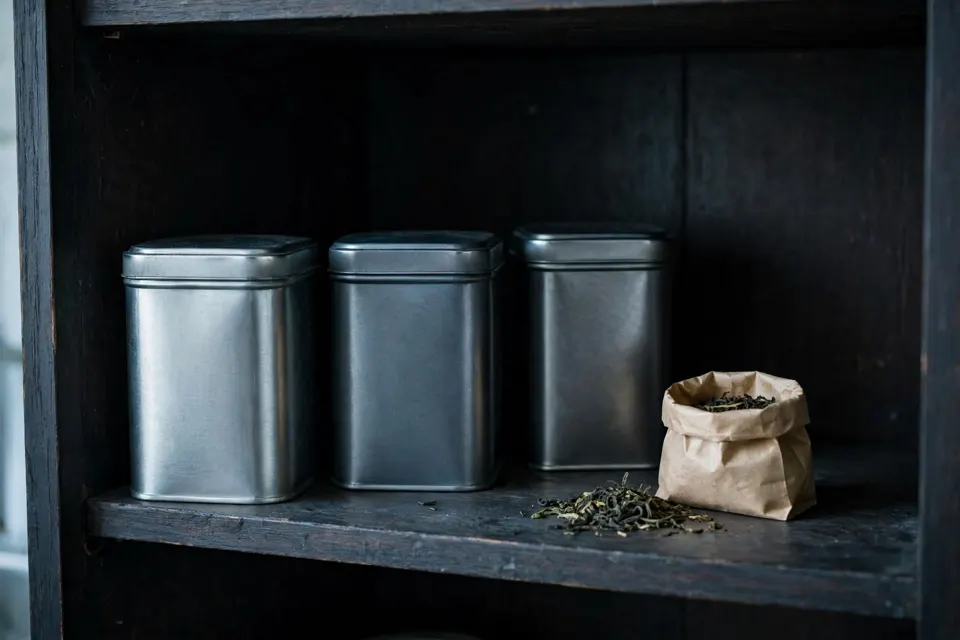
Use a container that seals well and blocks light: a metal tin with a tight lid, or a dark glass jar kept inside a cupboard, both work. A sealed bag, squeezed to remove most of the air and then placed inside a tin, works too. A clear jar on a sunny shelf does not, however pretty it looks.
Keep different teas separate. Do not mix a fragrant jasmine tea with a roasted oolong in the same tin, or both will end up tasting like a compromise. Label each container with the tea name and the date you opened it. That small habit tells you, months later, which tea to finish first.
Where to put it
A cool, dark kitchen cupboard is ideal for tea you drink regularly. Avoid the shelf above the stove, where heat and steam rise, and avoid a damp corner near the sink. For most daily teas, there is no need for a refrigerator. The cold can help for long-term storage of some delicate teas, but a fridge also brings moisture and food smells, and tea taken in and out will collect condensation. If you do refrigerate tea, seal it very well first, and let it come back to room temperature before opening it.
How long does it last?
There is no single answer, because teas differ. As a rough guide, a delicate green tea is best within a few months of opening, while a roasted oolong or a black tea will hold up longer. Pu-erh is the exception that ages differently, and it deserves its own reading before you treat it like other teas.
The simplest rule for how to store tea is the one from buying tea in the first place: buy small, finish what you open, and then open something new. Good storage cannot rescue a bag that has sat open for two years, but it can easily protect a small bag for the months it takes you to enjoy it.
Store tea well, and you do not have to think about storage again. The tin is closed, the cupboard is dark, and the next cup will taste like the tea you meant to buy.