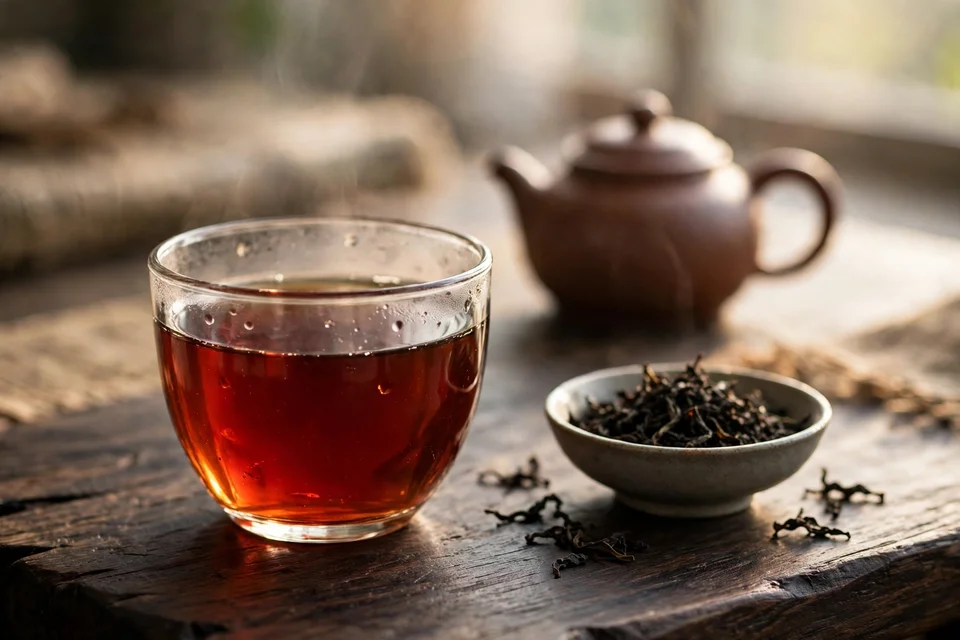
If you have ever had tea with milk, tea from a bag in a hotel, or a strong cup on a cold morning, you have almost certainly had black tea. In China it is called hong cha, red tea, named for the colour of the liquor rather than the dry leaves. It is the most fully changed of the Chinese teas, and that change is what gives it its warmth, its sweetness, and its forgiving nature.
What makes black tea black
All tea comes from the same plant. After picking, black tea leaves are left to change all the way: they are withered, rolled to break the leaves open, and then left in warm, damp air until they turn dark and coppery. Only then are they heated to stop the change and dried. That long, full process is what makes black tea different from green tea, which is heated almost at once, and from oolong, which stops halfway. The result is a tea that is darker, rounder, and softer in the cup — less sharp, less grassy, and much harder to spoil.
What it tastes like
Black tea tastes warm. A good one is malty and sweet, with a smooth, full body and almost no bitterness when it is brewed right. Some, like Keemun from Anhui, are gentle and a little smoky, with a soft, wine-like depth. Others, like the teas of Yunnan, are rich and earthy, with a sweetness that lingers. The famous Zheng Shan Xiao Zhong, or Lapsang Souchong, from the Wuyi mountains is dried over pine smoke, and carries a clear, campfire note that people either love at once or need a little time to get used to. What they share is a comforting, steady character: this is the tea that tastes like a warm room.
How to brew it
Black tea for beginners is the most forgiving tea to start with. Use water just off the boil, around 95 degrees, and about three grams of leaves for a 150-millilitre cup or small pot. Steep for two to three minutes for a first cup. That is really all there is to it. Unlike green tea, it will not turn bitter if the water is a little too hot, and unlike a delicate white tea, it does not mind a longer steep. If you like milk, add it after the tea has brewed, not before — and use less milk than you think, so the tea still tastes like tea. Black tea also takes a second steep happily: the second cup is a little softer and sweeter than the first.
Three black teas to try first
If you want a place to start, try one of the classics. Keemun, from Qimen in Anhui, is the gentle one: smooth, slightly smoky, and easy to drink plain. Dian Hong, from Yunnan, is the rich one: dark, malty, and naturally sweet, with golden tips among the dark leaves. Zheng Shan Xiao Zhong is the distinctive one: its pine-smoked character is unlike any other tea, and a small cup of it is enough to understand why people have loved it for centuries. You do not need all three. One small bag of any of them, brewed simply, will show you what black tea is for.
When black tea fits best
Black tea suits the moments when you want something steady rather than delicate. A cold morning, a grey afternoon, a cup with breakfast, a quiet break between tasks. It is the tea people reach for when they are not in the mood to pay close attention — and that is not a criticism. A tea that tastes good even when you are half distracted is a useful thing to have in the cupboard. It is also the easiest tea to share: almost everyone has tasted something like it, so it needs no introduction.
Black tea is where most of the world meets Chinese tea, and black tea for beginners is a good place to start. It asks for no special teaware, no careful timing, and no acquired taste. Just hot water, a few dark leaves, and two or three minutes. The cup comes out warm, red, and round — and it is the same cup people have been drinking, in one form or another, for centuries.