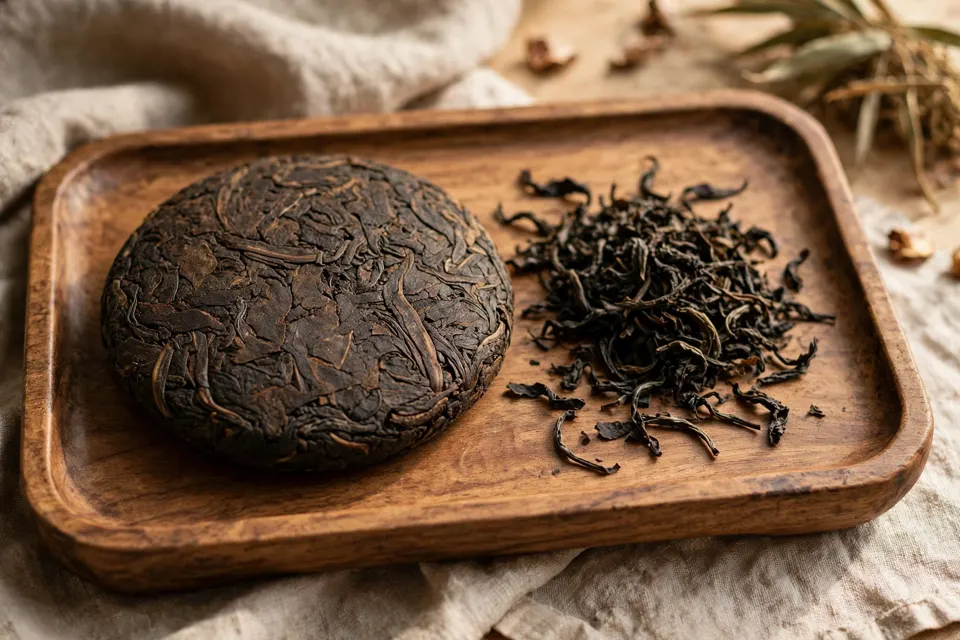
Pu-erh is a dark tea from Yunnan, in south-west China, usually pressed into cakes, bricks, or small nests for storage and transport. Pressing is practical: a cake takes up less space, travels well, and ages more evenly than loose leaves. But pressing is also the beginning of pu-erh's story, because a pressed tea keeps changing long after it leaves the maker.
Sheng: raw, and left to age on its own
Sheng, often called raw pu-erh, is pressed and then left to age slowly, over years. When young, it can taste bright, sharp, and lively, sometimes with a pleasant bitterness that turns sweet in the aftertaste. With time, that edge softens, the flavour deepens, and the cup becomes smoother and more layered. How fast that happens depends on storage: a cool, dry, well-ventilated place with no strong smells will age tea more cleanly than a damp cupboard.
Shou: ripe, fermented faster on purpose
Shou, often called ripe pu-erh, goes through a faster, controlled fermentation before it is pressed. Makers pile the leaves, keep them warm and damp, and turn them regularly, which speeds up the changes that sheng would take years to reach on its own. The result is usually dark, smooth, and earthy, with a soft, rounded cup that is easy to drink even when the tea is young. If sheng is a tea you watch grow up, shou is a tea that arrives already settled.
How to choose between them
Choose sheng if you enjoy tasting change: a young sheng today will not taste the same in a year, and following that change is part of the pleasure. Choose shou if you want a calm, dark, everyday cup without waiting. Neither is better in general; they are two answers to the same question, which is how much time you want to give a tea.
For a first sheng vs shou try, buy a small amount of each, brew them the same way, and compare. Use water just off the boil, a short first steep, and several infusions. Notice the colour, the texture, and how long the taste stays after you swallow. That comparison will tell you more than any label.
A note on buying and storing
Sheng vs shou is also where pu-erh attracts its strongest claims and highest prices. As a beginner, ignore the oldest and most expensive cakes for now. Buy a small, recent shou and a small, recent sheng from a seller who can say plainly where the tea came from and when it was made. Store both sealed, cool, dark, and away from spices and coffee, and keep a note of when you opened them.
Pu-erh does not need to be mysterious. It is pressed leaves, time, and water. The rest is practice, and practice is just drinking it, slowly, a few times.