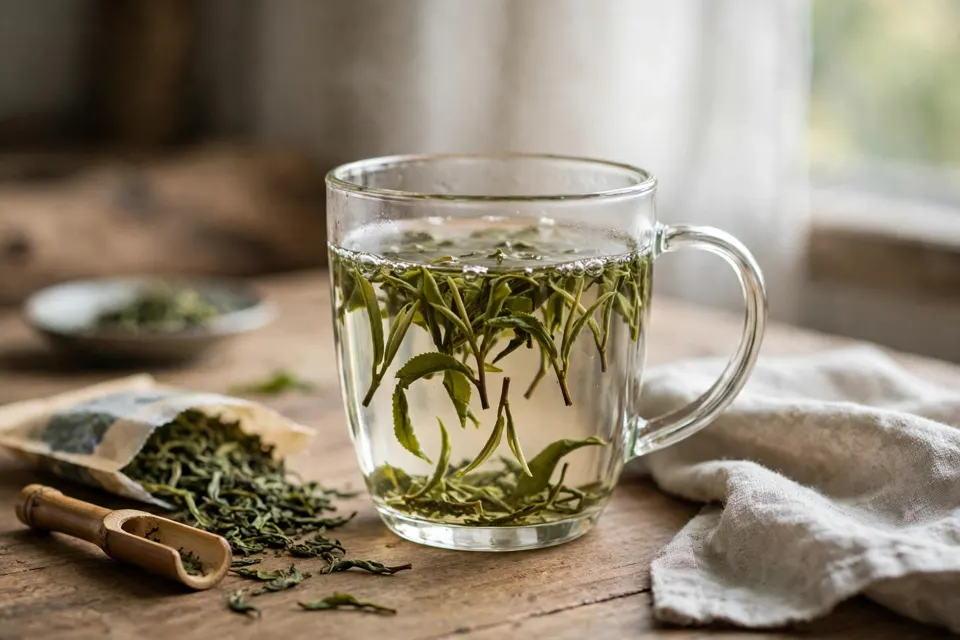
Chinese tea can look complicated from the outside: small pots, many pours, words you have never heard. Most of that is optional. At home, brewing tea is closer to cooking rice than to performing a ceremony. Once you know a few basics, you can adjust everything else by taste.
The simple method
Start with a small teapot or a large mug with a strainer. Warm the vessel first with hot water, then pour that water away. This is not fussiness for its own sake; a warm pot keeps the temperature steadier, and the tea tastes rounder for it.
Use about one generous teaspoon of loose leaves per cup, or roughly 5 grams per 150 millilitres if you like numbers. Pour water over the leaves, wait, and pour the tea out. For most green teas, use water that has cooled a little after boiling, around 80 to 85 degrees. For oolong, black tea, and pu-erh, use water just off the boil.
When you learn how to brew Chinese tea, steep briefly at first: 30 to 60 seconds for the first infusion is a good starting point. Taste it. If it is too light, steep longer next time. If it is bitter, use slightly cooler water or fewer leaves, not a longer steep. Chinese tea is usually steeped several times, and the second and third infusions are often the most interesting, because the leaves have fully opened. If you would rather not watch the clock, our Tea Brewing Timer gives you the water temperature, leaf amount and steeping time for six teas, then counts down for you.
Three mistakes beginners make
First, using boiling water for everything. Delicate green tea turns bitter and flat in water that is too hot. Let the kettle sit for two minutes, or pour the water into a pitcher first to cool it.
Second, leaving the leaves in the water while drinking. Tea keeps extracting, so a cup that tasted perfect at first can turn harsh ten minutes later. Pour the tea out into cups or a pitcher, and keep the leaves separate until the next infusion.
Third, buying too much tea at once. Loose tea loses its aroma over months, especially once opened. Buy small amounts, store them in a sealed, opaque container away from light and strong smells, and finish one tea before opening three more.
What good tea should taste like
Do not chase a single correct flavour. Green tea may taste fresh and grassy, or sweet and nutty, depending on the leaf. Oolong may taste floral, roasted, or honeyed. The point is not to identify notes like a judge. The point is to notice whether you like this cup, and what you would change next time: a little less leaf, a little cooler water, a little shorter steep.
That is the whole skill of how to brew Chinese tea. Everything else in tea culture — the pots, the rituals, the stories — grows out of this one habit: paying attention to a cup of tea for a few minutes, and letting it be enough.